StockLedger workflow
Turn daily records into management views
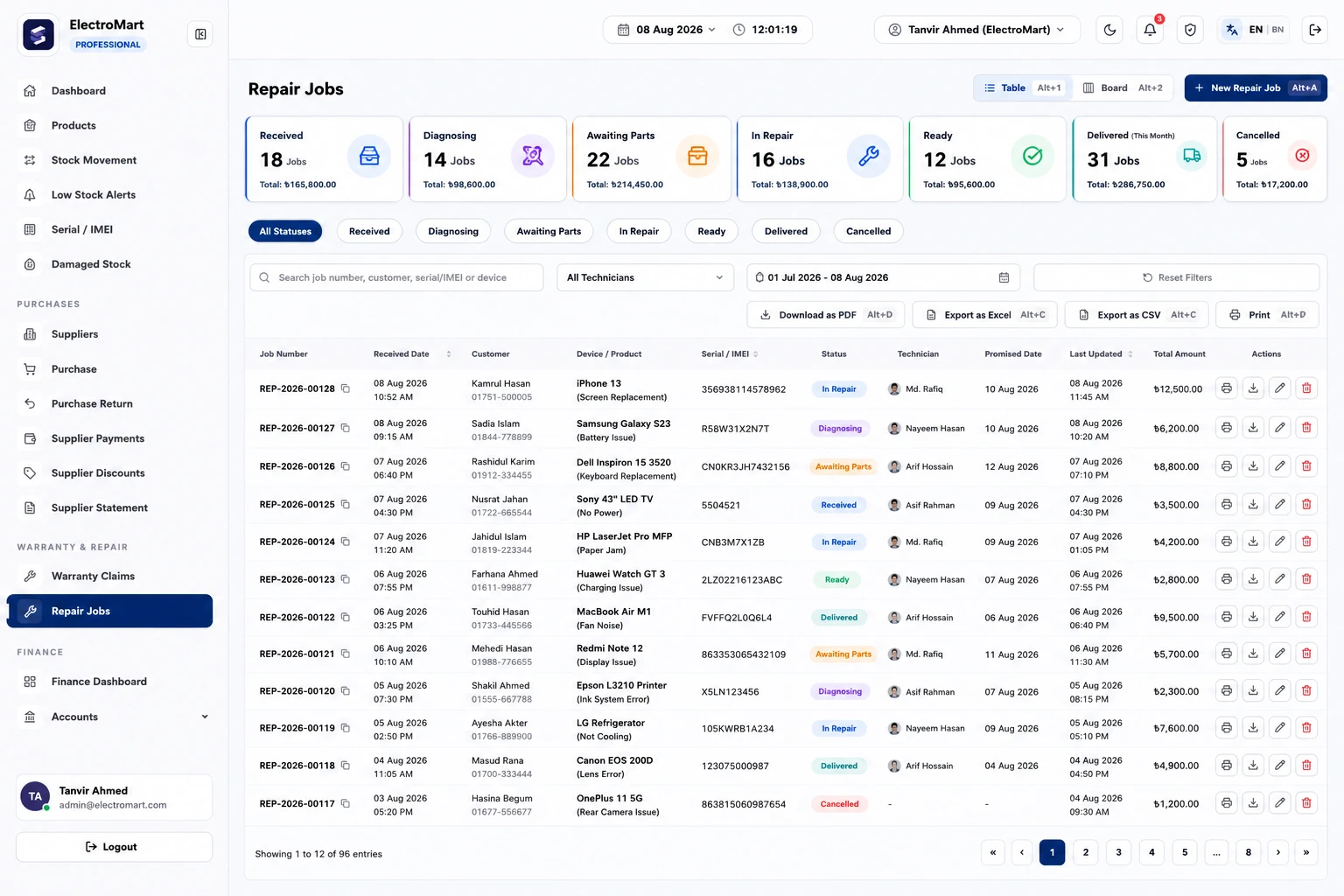
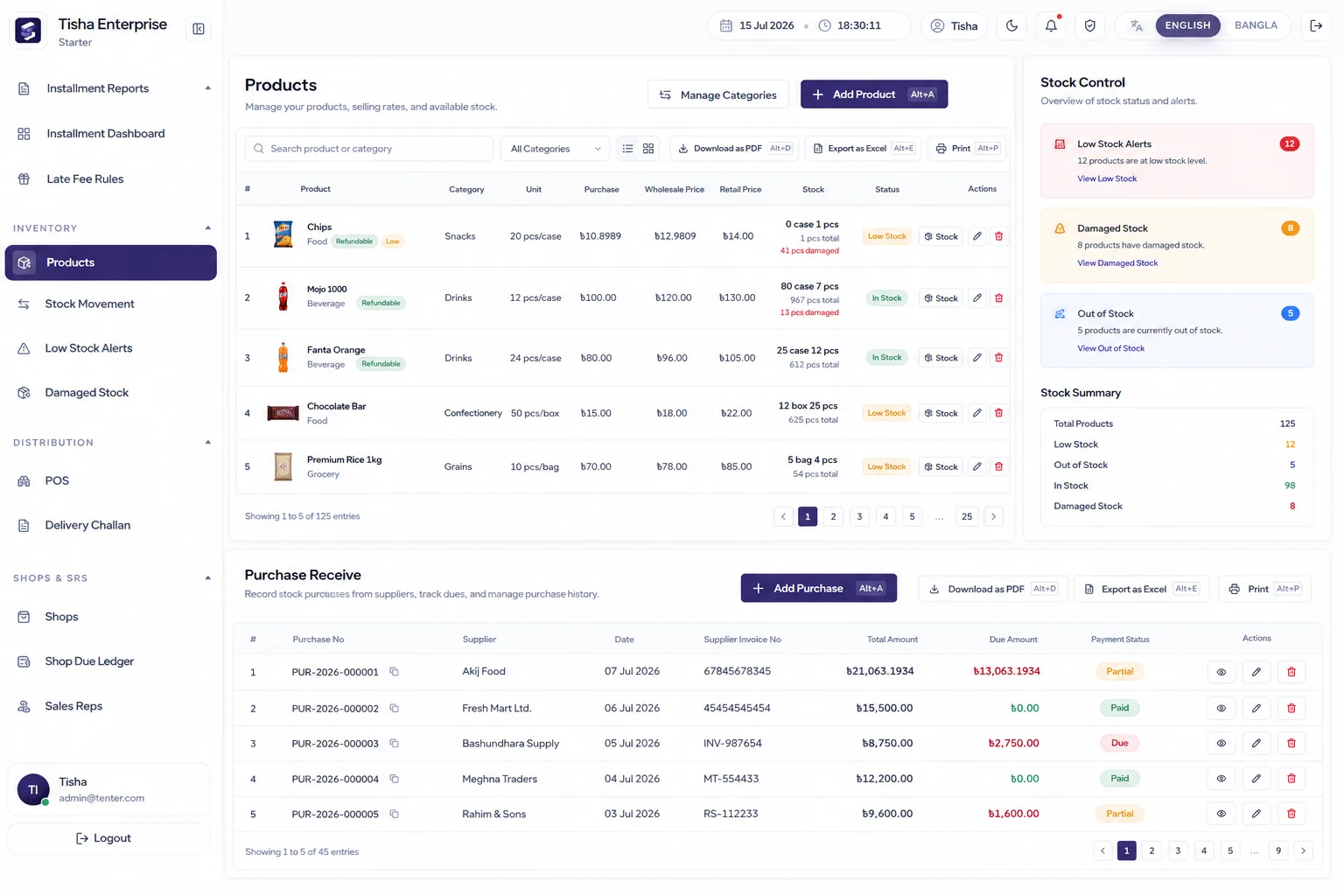
Sales, purchases, stock movements, returns, collections, supplier payments, expenses, finance activity, and posted journals feed their related dashboards and reports. Owners can move from a summary to the source workflow instead of waiting for a separately compiled spreadsheet.
StockLedger workflow
Review operations at the right cadence
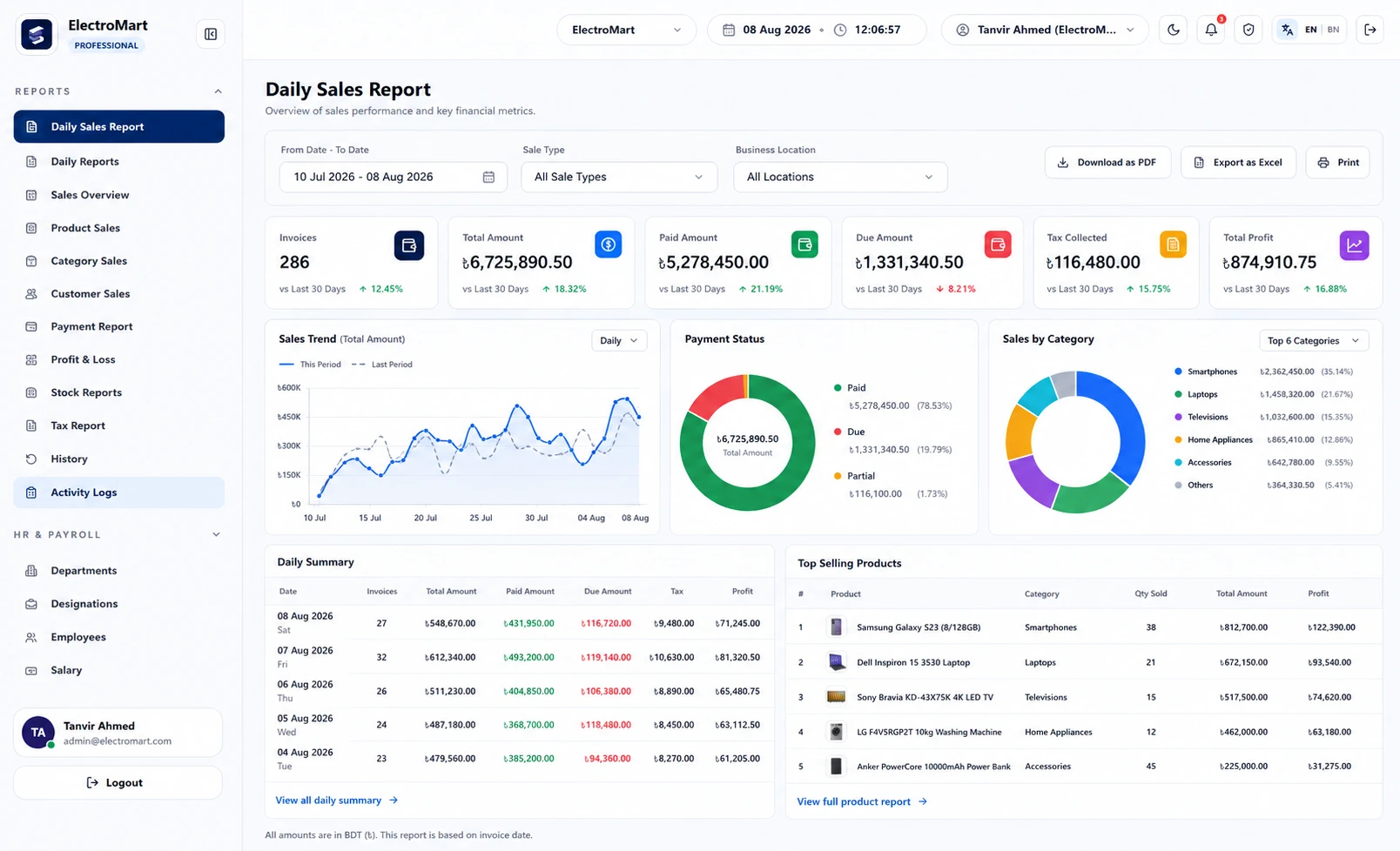
Daily sales and close views support counter and branch review. Stock movement, low-stock, due, profit, HR, and activity reports support operational follow-up. Date and branch filters help managers compare the same scope before acting on a change.
StockLedger workflow
Use accounting reports for financial review
General ledger and account-ledger views expose posted movement and running balances. Trial balance checks debit and credit totals; profit and loss summarizes income and expenses; balance sheet presents assets, liabilities, and equity; cash book, bank book, customer ledger, and supplier ledger support balance review.
StockLedger workflow
Give owners and accountants different levels of detail
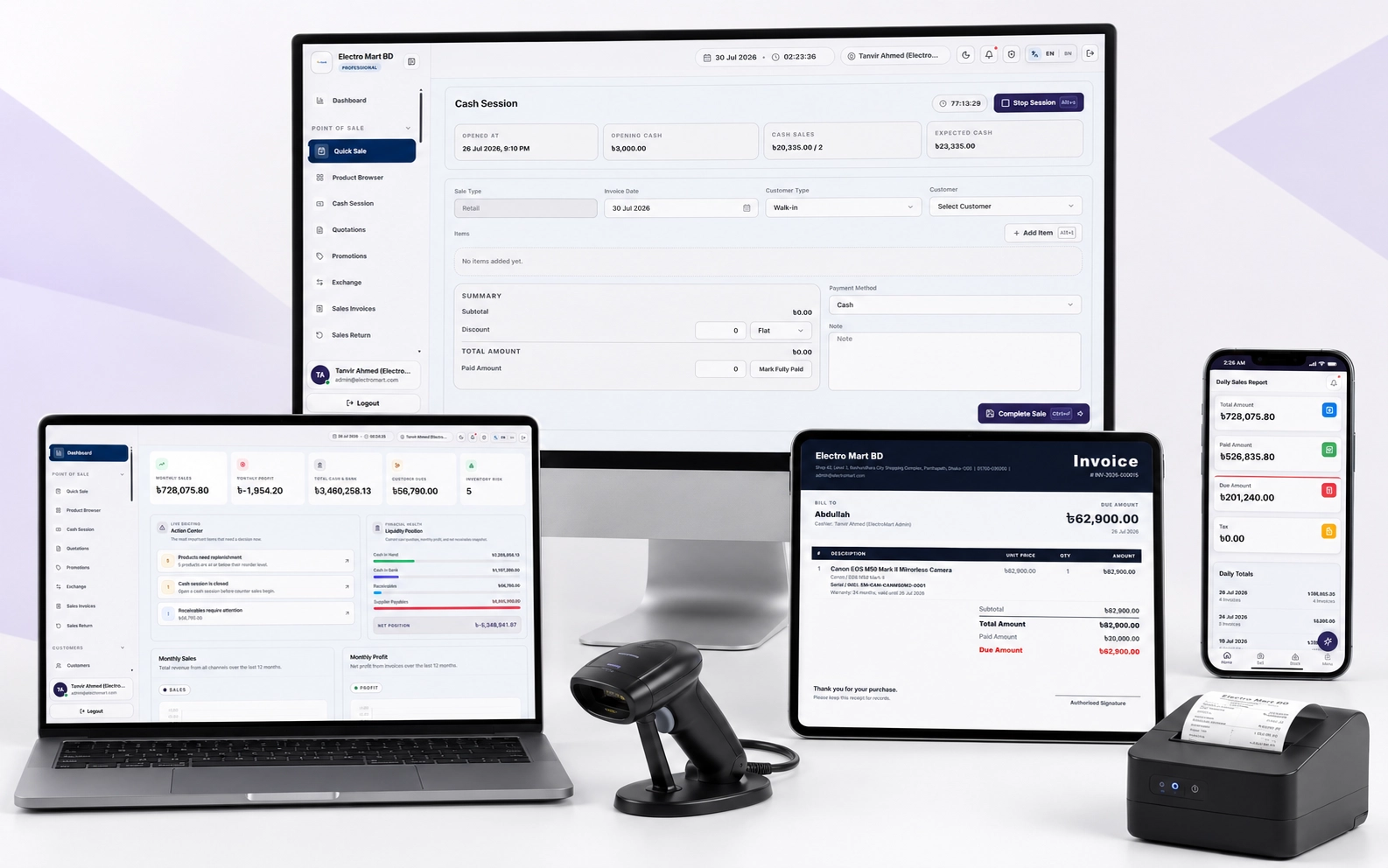
Owners can monitor sales, stock, dues, expenses, cash, bank, and profit indicators. Accountants can inspect source references, journal lines, account classifications, opening balances, posting periods, customer and supplier balances, and statement totals before approving a period-end view.
StockLedger workflow
Treat every report as an output of its inputs
Reports depend on complete opening data, consistent transaction entry, correct dates, accounts, branches, costs, and payment methods. StockLedger helps expose and trace the records, but professional review is still required for reconciliations, estimates, adjustments, accounting policy, tax, audit, and statutory decisions.
Buying guide
How to evaluate this type of software
Buyers usually land on this page when the current workflow has become too manual, too slow, or too disconnected from daily reporting. They are not just looking for a feature list. They want to know whether Reports & Analytics can stay connected with sales, stock, due, purchasing, finance, user control, and management reporting.
That is where StockLedger is different from a narrow single-purpose tool. It is designed for businesses that want one operational system instead of separate apps that have to be reconciled later. For many teams in Bangladesh, that means fewer duplicate entries, better owner visibility, and cleaner day-end or month-end review.
Expected outcomes
What usually improves after implementation
Quicker operational review using dashboards and reports tied to live workflows.
Less debate over numbers because teams look at one connected record base.
Better decision-making for stock, due, spending, and profit control.
Connected modules
What businesses usually connect next
The clearest buying guides connect each requirement to the wider operation. A company that needs Reports & Analytics rarely needs it in isolation. Most teams also ask about reporting, finance visibility, stock accuracy, collection control, role permissions, or route accountability.
Frequently asked questions
Can I review daily sales, stock, dues, and profit?
Yes. StockLedger includes dashboards and operational reports for these areas, with available filters depending on the report.
Can I move from a report total to supporting records?
Many accounting and operational reports retain dates, references, parties, accounts, branches, or source-document context so a reviewer can investigate the total.
Can I export reports?
Several modules include Excel, PDF, and print-oriented actions. Confirm the exact export and layout needed during a demonstration.
Do reports include customer and supplier balances?
Yes. Customer and supplier ledger workflows show receivable or payable movement and running outstanding balances from posted journal activity.
Are reports automatically accurate and compliant?
No. Accuracy depends on configuration and complete, correctly classified source records. A qualified reviewer must handle reconciliations, adjustments, accounting policy, tax, audit, and legal requirements.