StockLedger workflow
Receive stock with a traceable purchase record
Create the supplier purchase, receive the products, and confirm quantities and costs. StockLedger updates product availability and keeps the purchase, supplier, and stock movement connected for later review.
StockLedger workflow
Sell, return, transfer, or adjust without losing the history
Sales reduce available stock, while returns, branch transfers, and damaged-stock entries record why quantities changed. Managers can review movement history instead of correcting an unexplained number at month end.
StockLedger workflow
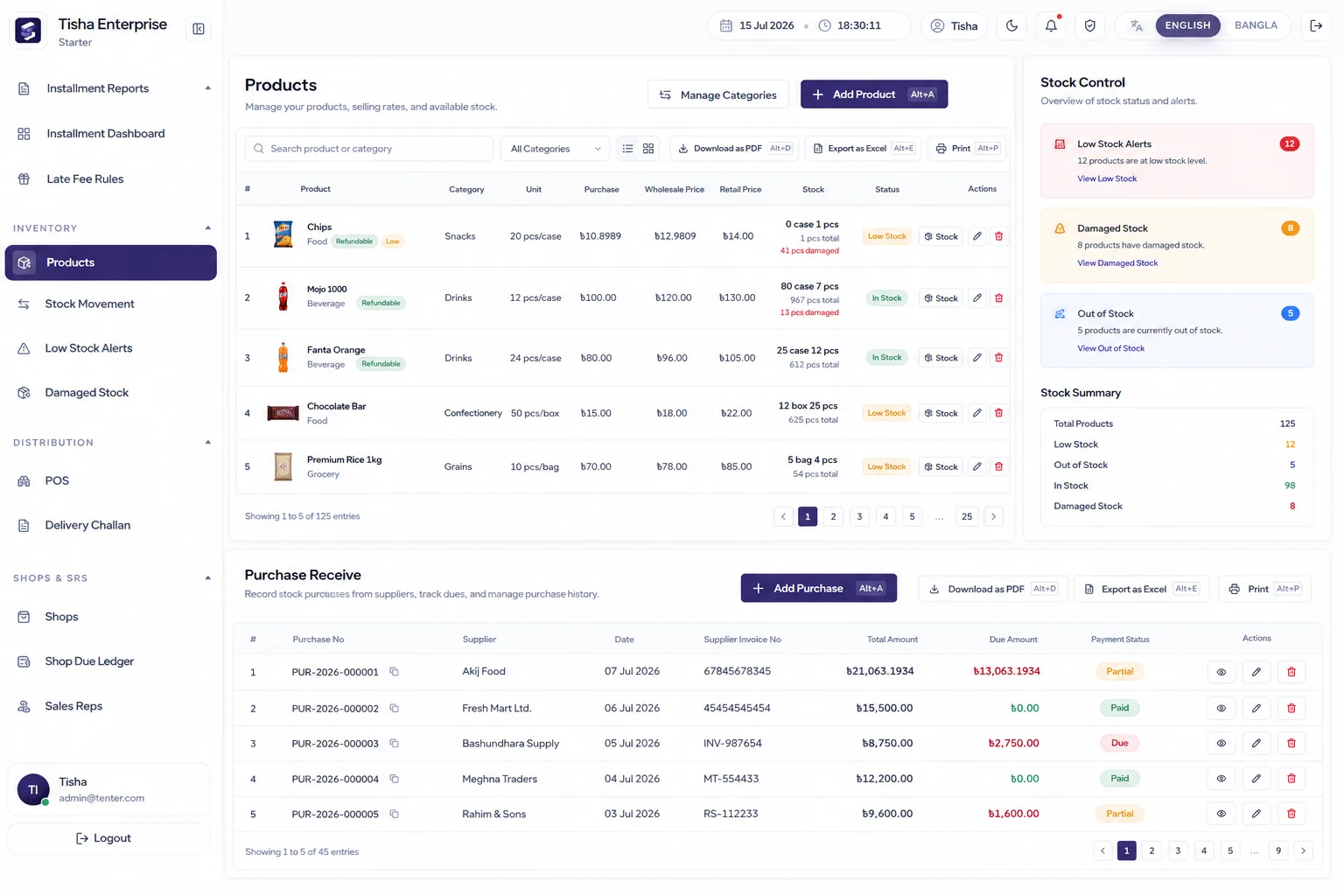
Act before a stock problem affects cash or customers
Low-stock visibility helps teams plan replenishment before shelves become empty. Product movement, damaged quantity, purchase cost, selling price, and estimated margin give owners better context for deciding what to reorder, discount, or stop buying.
StockLedger workflow
Prepare reliable data before the team starts
Implementation requires a product list, units, opening quantities, costs, selling prices, reorder levels, suppliers, users, and permissions. Barcode hardware is optional; accurate stock still depends on recording purchases, sales, returns, damage, and transfers consistently.
Buying guide
How to evaluate this type of software
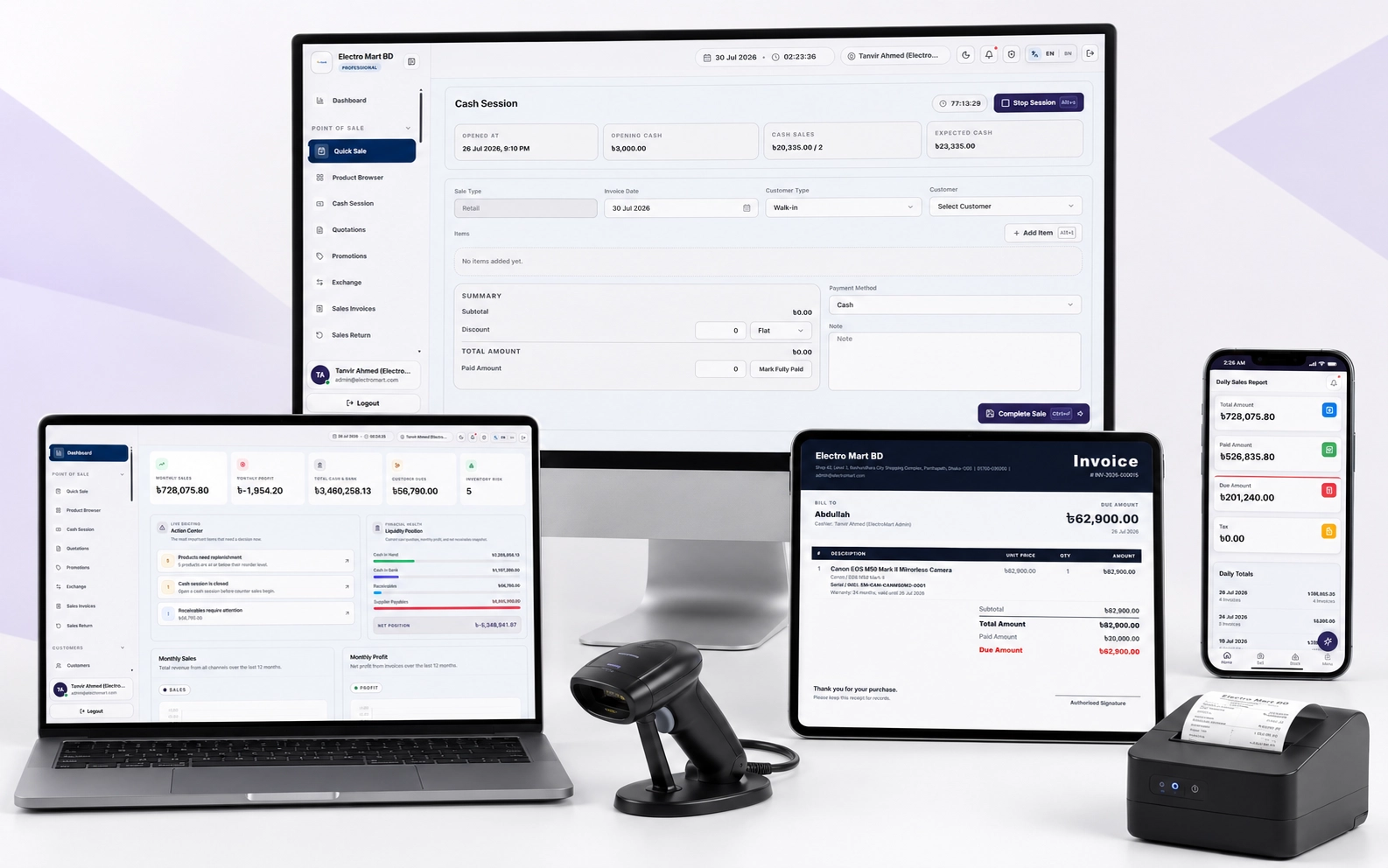
Buyers usually land on this page when the current workflow has become too manual, too slow, or too disconnected from daily reporting. They are not just looking for a feature list. They want to know whether Inventory Management can stay connected with sales, stock, due, purchasing, finance, user control, and management reporting.
That is where StockLedger is different from a narrow single-purpose tool. It is designed for businesses that want one operational system instead of separate apps that have to be reconciled later. For many teams in Bangladesh, that means fewer duplicate entries, better owner visibility, and cleaner day-end or month-end review.
Expected outcomes
What usually improves after implementation
Fewer stock surprises at the counter or during wholesaler delivery planning.
Clearer purchase decisions from low-stock visibility and movement history.
Better connection between stock value, purchases, sales, and profit reporting.
Connected modules
What businesses usually connect next
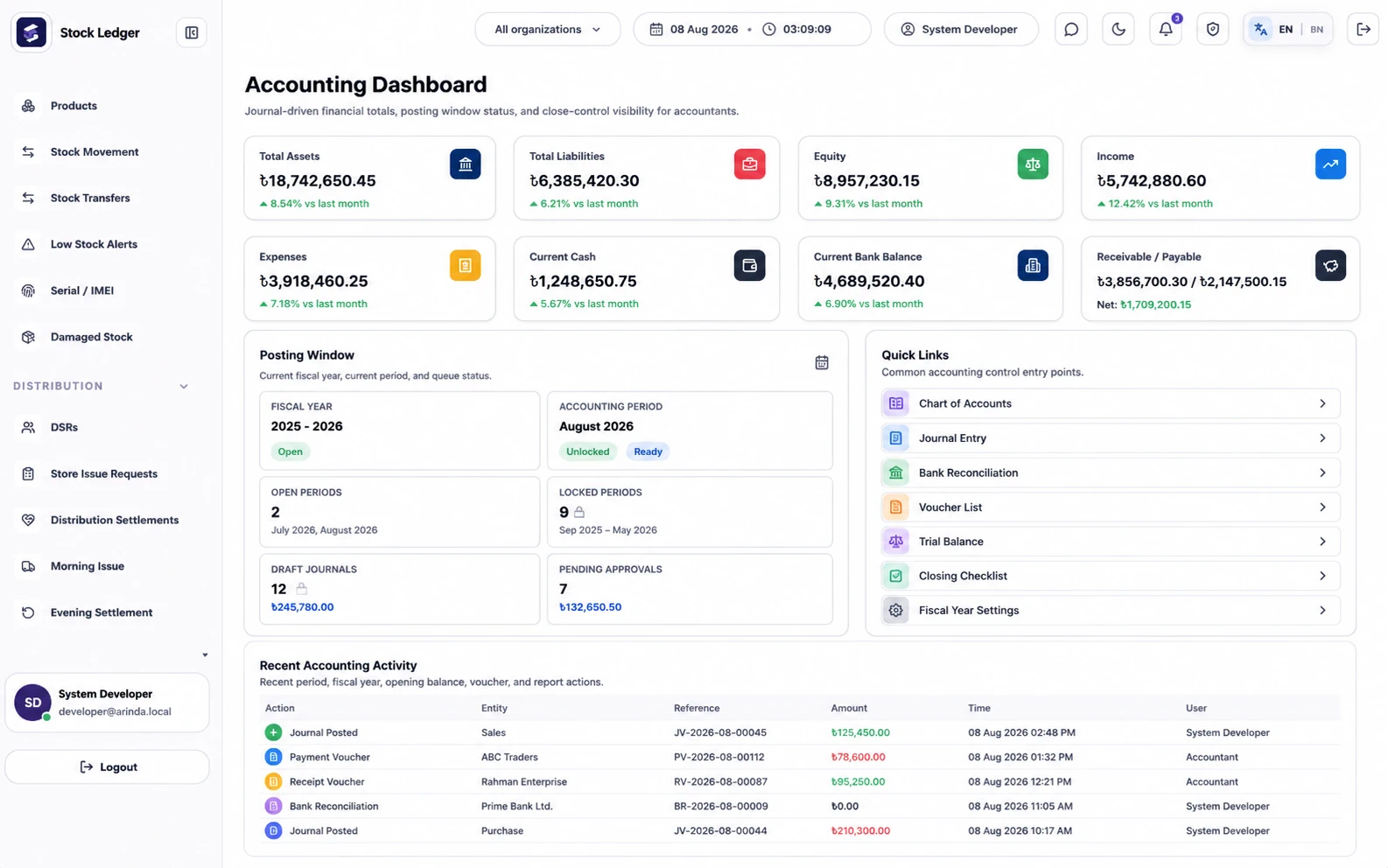
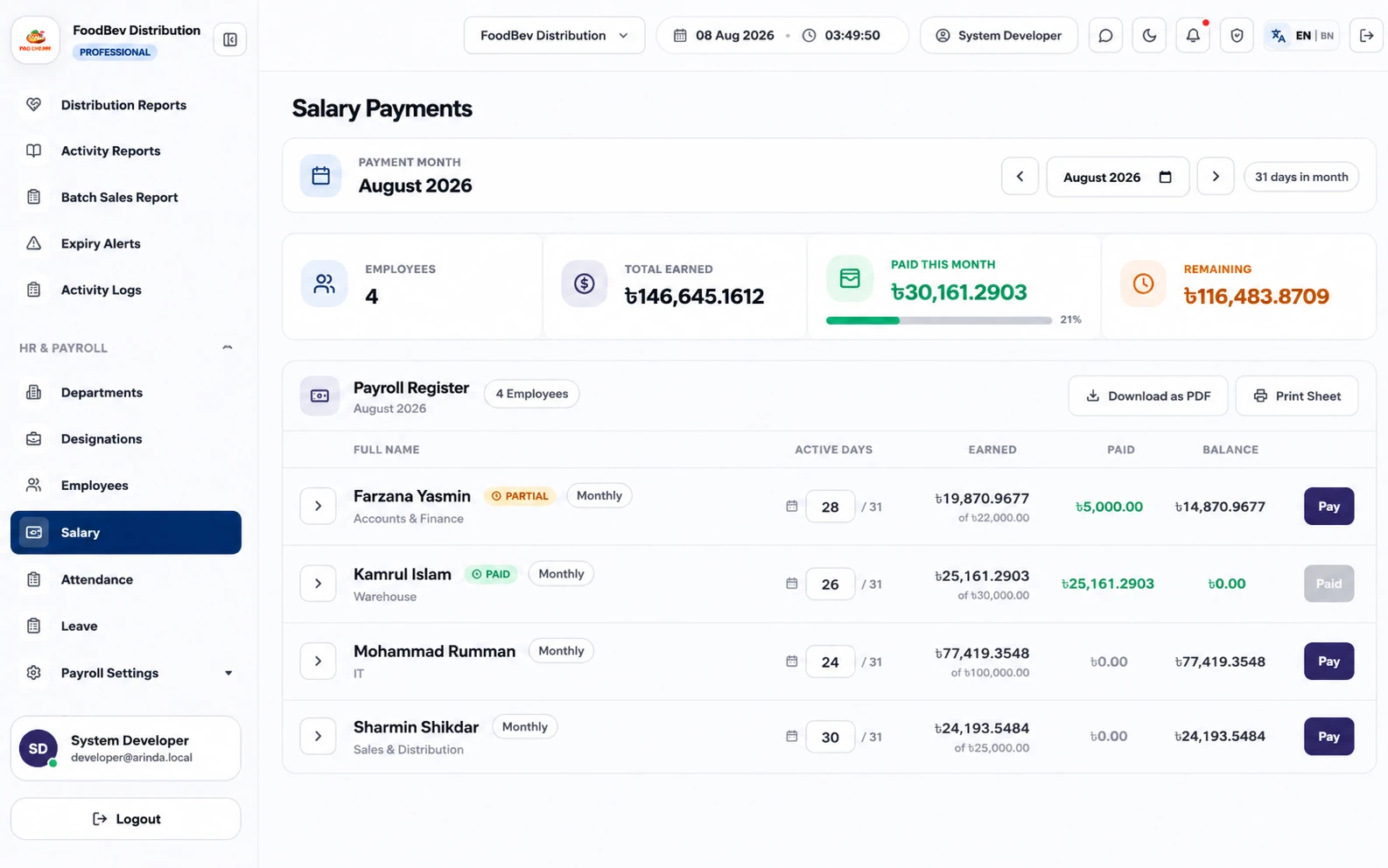
The clearest buying guides connect each requirement to the wider operation. A company that needs Inventory Management rarely needs it in isolation. Most teams also ask about reporting, finance visibility, stock accuracy, collection control, role permissions, or route accountability.
Frequently asked questions
Can I track low stock?
Yes. StockLedger includes low-stock visibility so teams can reorder before shelves become empty.
Can I track serial numbers?
Yes. Product serial tracking is available for businesses such as electronics and mobile shops.
Can inventory connect with purchases and sales?
Yes. Stock records stay connected with purchase receive, sales activity, returns, and reporting workflows.
Do I need barcode hardware?
No. Inventory works without it. A compatible scanner and label-printing process can speed up high-volume product entry when needed.
What can make the stock balance wrong?
Unrecorded movements or incorrect opening quantities affect the balance. The system provides traceability, but the team must record real activity consistently.