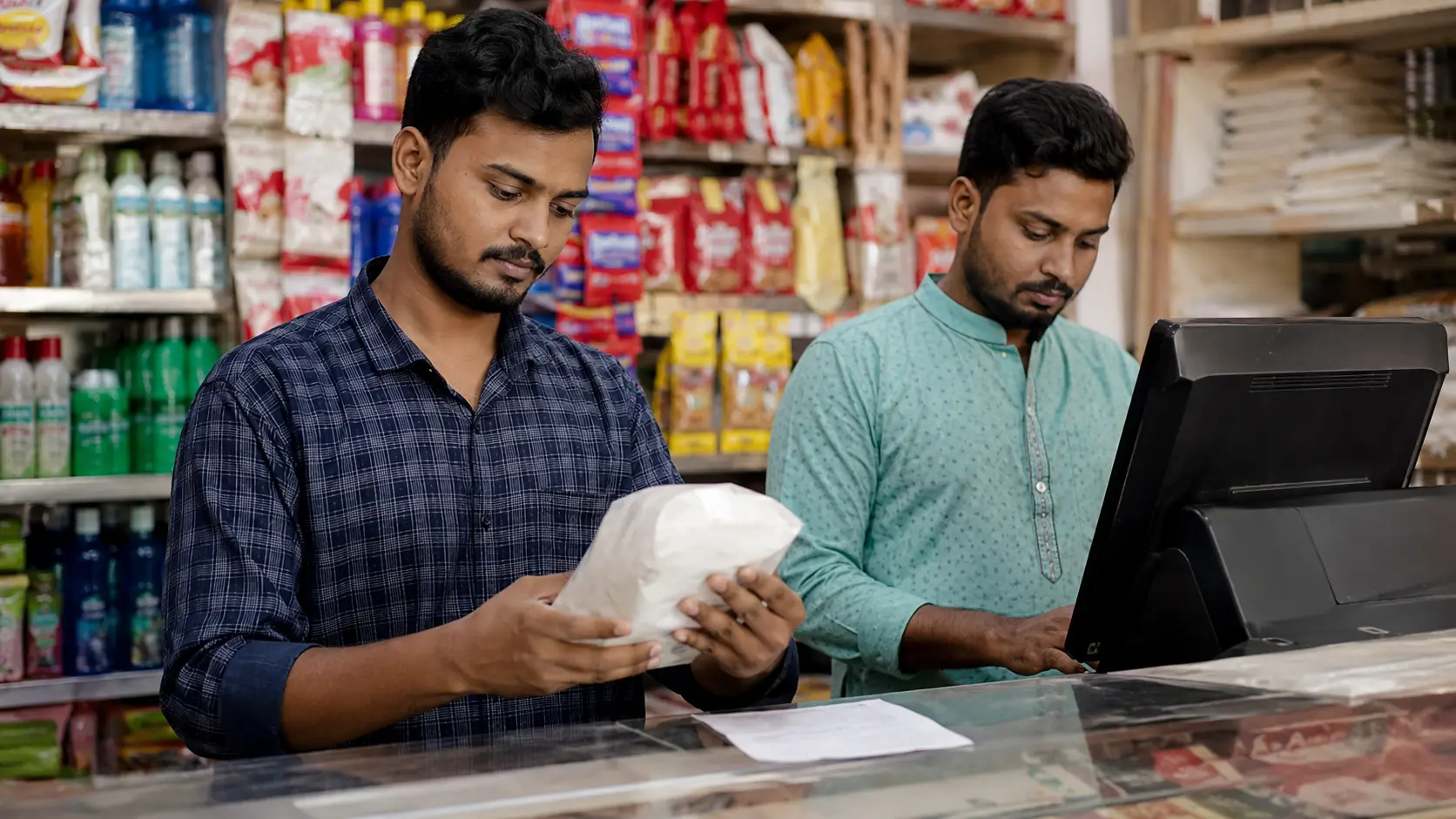

Why supplier balances often stop matching
A supplier balance should answer a simple question: after purchases, returns, discounts, and payments, how much does the business still owe the supplier? In practice, the answer becomes difficult when the purchase invoice is recorded in one place, payment is written in a cash book, returned goods are noted separately, and an agreed discount remains only in a phone conversation or message. At month end, the supplier may say ৳80,000 is outstanding while the business notebook says ৳72,000. The difference does not automatically mean either side is wrong. It may come from a missing purchase, an unrecorded return, a payment that the supplier has not allocated, a discount that has not been approved on both sides, an incorrect opening balance, or transactions recorded in different periods. The safest approach is to rebuild the balance from source transactions instead of changing the closing total until it looks right. Editorial disclosure: this worked example is illustrative only and is not a customer endorsement. StockLedger has not collected a customer quotation for this scenario and none is pending publication. The example makes no percentage improvement claim about any real business and should not be read as typical or guaranteed results.
Use one supplier-balance formula consistently
For a simple credit-purchase workflow, use a consistent operational formula: closing supplier due = opening supplier due + credit purchases - accepted purchase returns - approved supplier discounts or credits - supplier payments. Add or subtract other adjustments only when they are genuine, documented, and understood. Cash purchases that are fully paid immediately should not remain as unpaid supplier due after the related payment is recorded. Likewise, returning goods should reduce the payable only when the supplier has accepted the return or the business has an approved credit under its process. This formula is a reconciliation tool rather than a complete accounting policy. Tax treatment, debit notes, credit notes, advances, foreign-currency transactions, finance charges, and period-end accounting may require additional treatment. The important control is that every number changing the supplier balance should have a date, amount, reason, and source reference that can be checked later.
Start with a verified opening supplier balance
Before checking today's activity, establish the opening balance. Suppose Rahman Trading starts 14 August with ৳50,000 payable to Supplier A. That ৳50,000 should not be copied blindly from an old spreadsheet. Ideally, the business should be able to explain it using earlier unpaid invoices, accepted returns, payments, discounts, or a previously reconciled supplier statement. If the supplier says the opening amount is ৳55,000 while the business records show ৳50,000, investigate that difference before adding a new month of transactions. Otherwise the old problem becomes part of every future closing balance. For a new software rollout, opening supplier balances deserve the same attention as opening stock. Record the effective date, supplier, approved opening amount, and evidence used. An unexplained opening figure may allow today's transactions to be entered perfectly while the supplier statement still never agrees.
Record purchases when the business actually receives the liability
The next part of the balance is new credit purchases. Example only: Supplier A delivers goods with an accepted invoice value of ৳30,000. If the purchase is on credit, the supplier payable increases by ৳30,000. The business should retain the supplier invoice or purchase reference, date, products or receiving reference, accepted quantity, and total amount. Do not create supplier due merely from an order that has not yet become an accepted purchase under the business process. Also investigate receiving differences before treating the invoice as unquestionably correct. If the invoice says 100 pieces but only 95 arrive, the stock record and supplier obligation should be resolved through the proper purchase and supplier process rather than by silently changing stock later. A supplier balance is easier to trust when the amount owed can be traced back to the purchase records that created it.
Purchase returns and supplier discounts must reduce the right balance
A purchase does not always stay unchanged after receiving. Goods may be damaged, incorrect, excess, expired, or otherwise accepted for return under the supplier arrangement. In this worked example, the business returns goods worth ৳5,000 from the ৳30,000 purchase and the supplier accepts the return. The supplier balance should therefore reduce by ৳5,000. Separately, Supplier A approves a ৳2,000 commercial discount or credit against the account. That also reduces the amount payable once properly approved and documented. Keep these two events separate. A physical purchase return explains both a goods movement and a supplier-balance change, while a discount may change the supplier balance without sending the same quantity of goods back. Mixing both into one adjustment makes later stock and accounting review harder. Record the purchase or invoice reference, amount, reason, date, and supplier acknowledgement where the business requires it.
Record supplier payments, then calculate the closing balance
Payments are the next major source of supplier-balance differences. In the example, the business pays Supplier A ৳25,000. Record the actual payment amount, date, payment method, supplier, and reference. If payment is made through bank, cash, cheque, or another supported channel, the payment record should reflect what really happened rather than using a convenient method simply to close the supplier balance. A payment should not be hidden inside a purchase edit, and a purchase value should not be reduced merely because some money was paid later. Keeping the purchase and payment as separate events makes it possible to answer two different questions: what did the business buy, and how much of the resulting supplier obligation has been settled? Now combine the fictional transactions. Opening supplier due is ৳50,000. Add the new credit purchase of ৳30,000, producing ৳80,000. Subtract the accepted purchase return of ৳5,000, leaving ৳75,000. Subtract the approved supplier discount of ৳2,000, leaving ৳73,000. Finally, subtract the supplier payment of ৳25,000. The expected closing supplier due is therefore ৳48,000. Formula: ৳50,000 + ৳30,000 - ৳5,000 - ৳2,000 - ৳25,000 = ৳48,000. The value of the worked example is not the arithmetic itself. Each part of the ৳48,000 can be explained by a source transaction. If the supplier cannot identify a payment, the bank or cash evidence and payment reference provide the starting point for investigation.
6. Worked supplier balance reconciliation in BDT
Assume the agreed opening payable is ৳125,000. During the month the business records ৳240,000 of credit purchases, ৳18,000 of accepted purchase returns, a ৳7,000 supplier discount, and ৳150,000 of payments. Expected closing payable = ৳125,000 + ৳240,000 - ৳18,000 - ৳7,000 - ৳150,000 = ৳190,000. The supplier statement shows ৳202,000, a ৳12,000 difference. The reviewer does not post a balancing adjustment. Instead, the team matches references and finds a ৳12,000 delivery that was received physically but never entered as a purchase. After recording the genuine invoice, the internal balance becomes ৳202,000. This is a hypothetical calculation, not a reported customer result.
7. Compare four records before accepting the closing balance
A reliable review compares the supplier statement, internal supplier ledger, purchase-receive history, and payment evidence for the same cutoff date. Match invoice number, receive reference, return note, discount approval, payment reference, amount, and date. Then check whether goods received after the cutoff belong to the next period and whether a payment sent near month end had cleared on the supplier statement. A difference is not automatically an accounting error: it may be timing, an unrecorded document, a duplicate entry, a disputed quantity, or a payment allocated to the wrong invoice. Classify it before correcting it.
8. Use an exception register instead of forcing agreement
For every unresolved difference, record the supplier, reference, internal amount, statement amount, difference, likely cause, evidence required, owner, target date, and status. Freeze or separately approve backdated edits after the review cutoff. Material disputed invoices, unsupported discounts, unmatched payments, and old debit balances should be escalated according to company policy. Never change an opening balance merely to make two reports agree. The next review should begin with the prior exception register so unresolved items cannot disappear between spreadsheets or accounting periods.
9. What connected software can and cannot prove
Connected purchase and accounting records can reduce manual reconstruction by keeping receipts, returns, discounts, payments, ledgers, and source references together. They cannot prove that delivered quantity was physically correct, a supplier statement is complete, a bank transfer reached the intended account, or a tax treatment is appropriate. Those questions still need documents, segregation of duties, management approval, and qualified accounting review. Evaluate software by tracing one supplier from opening balance through closing statement, including at least one return and partial payment, rather than relying only on dashboard totals.