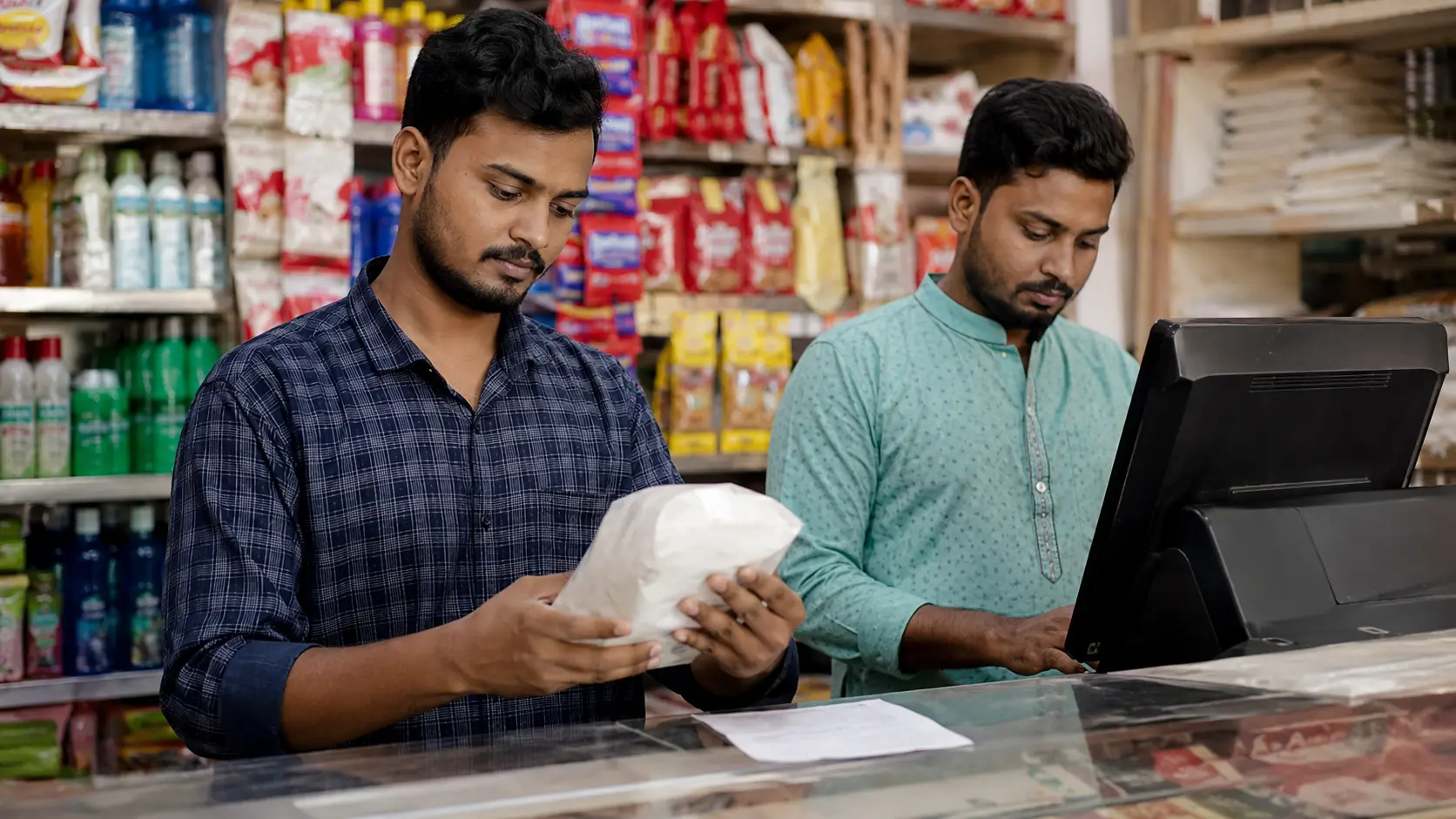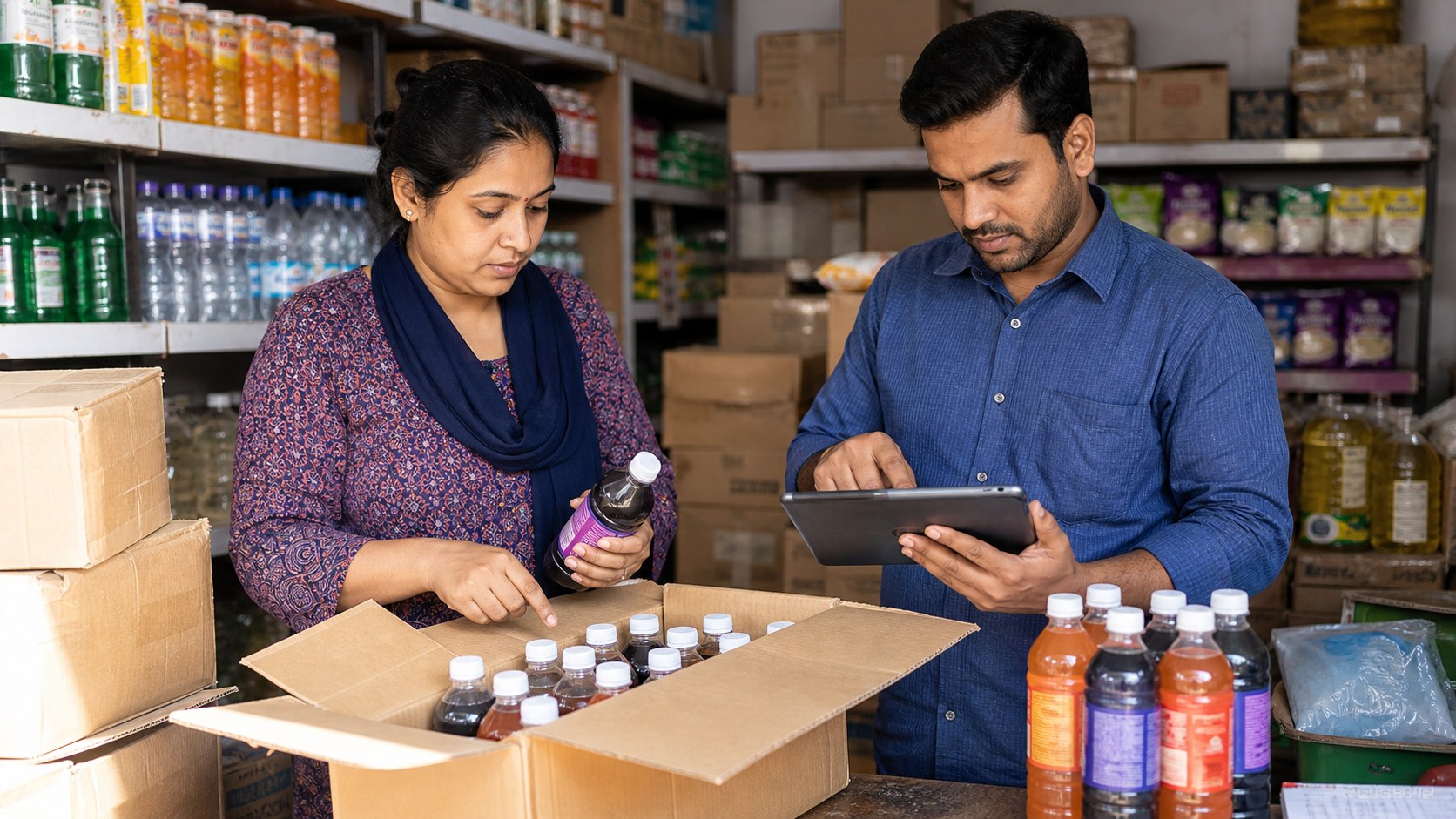

What a DSR evening settlement should prove
A DSR evening settlement should explain what happened between the morning stock issue and the representative's return to the office. The supervisor should be able to trace issued stock into sales, good returns, damaged returns, approved handovers, and any shortage or excess. Shop activity should explain today's cash sales, due sales, collections against older dues, customer returns, discounts, and closing shop balances. Finally, cash and digital collections should agree with the amounts actually handed over or deposited. This worked example is fictional and uses illustrative BDT amounts. It is not a customer case study or market benchmark. The purpose is to show how a Bangladesh distributor, dealer, or wholesaler can reconcile one route without mixing stock, shop due, collection, and cash into one unexplained total. Editorial disclosure: this worked example is illustrative only and is not a customer endorsement. StockLedger has not collected a customer quotation for this scenario and none is pending publication. The example makes no percentage reduction claim about any real business and should not be read as typical or guaranteed results.
Start with the DSR, route, date, and morning issue
Example only: DSR Rahim is assigned Route North-3 for 14 August. The morning issue should identify the DSR, route, date, issue reference, products, quantities, and the business's approved working or accountable values where those are used. Do not combine yesterday's unresolved stock with today's issue without showing the opening balance separately. The same applies to extra stock received during the route. For one sample product in this example, Rahim receives 5 cases with 24 pieces per case, or 120 pieces. Later, an approved extra issue adds another 1 case, or 24 pieces. The total quantity Rahim is accountable for during the day is therefore 144 pieces for that product. Recording the morning issue first creates the starting point for every later sale, return, handover, or shortage.
Reconcile issued stock before discussing cash
For the sample product, Rahim started with 144 accountable pieces after the extra issue. During the route, 110 pieces were sold or delivered to shops. He brings back 26 good pieces, 4 damaged pieces, and has an approved handover of 4 pieces to another field representative. The stock reconciliation is therefore 110 sold + 26 good return + 4 damaged return + 4 approved handover = 144 pieces. There is no unexplained stock shortage or excess for this product. This check should normally be performed product by product rather than relying only on a route-level quantity. If the arithmetic produces 143 instead of 144, do not alter a sale or return simply to force the total to match. Recount the physical return and review issue, sale, return, handover, and damage records until the missing piece is explained or recorded as an unresolved exception.
Record each shop visit with its own sale and collection details
A route total is difficult to investigate if the underlying shop activity is missing. Suppose Rahim visits several shops and the day's invoices total ৳64,000. Of this, ৳24,000 is paid in cash at the time of sale, ৳12,000 is paid through verified digital channels, and ৳28,000 is sold on due. These three amounts together equal the ৳64,000 of today's invoiced sales. Keep invoice or delivery references with the relevant shop. A due sale should increase that shop's outstanding balance but should not be treated as cash collected. Likewise, a digital payment should not be mixed into the physical cash handover. Shop-level records allow the supervisor to answer questions such as which shop created the new due, which invoice was paid immediately, and where a later return or collection belongs.
Keep old due collection separate from today's sales
During the same route, Rahim also collects ৳12,000 against balances that existed before today. Of that collection, ৳8,000 is received in cash and ৳4,000 through a verified digital payment. This ৳12,000 increases today's collection but it is not part of today's new sales. Mixing old due collection with today's sales can make both the route's sales performance and its customer balances misleading. The DSR record should therefore distinguish today's invoice value, today's due sales, today's immediate payments, and collections against previous dues. If a shop pays ৳5,000 today against a ৳20,000 old balance without buying anything new, route cash increases by ৳5,000 even though today's sales remain unchanged. That distinction becomes especially important when supervisors compare sales targets, collections, shop balances, and the cash received from the DSR.
Worked example: calculate the expected cash handover
Now calculate only the physical cash Rahim should hand over. Cash received from today's sales is ৳24,000. Cash collected against older shop dues is ৳8,000. Total cash received is therefore ৳32,000. During the route, Rahim has an approved ৳1,000 cash route expense and a documented ৳500 cash customer refund. Expected cash handover is therefore ৳24,000 + ৳8,000 - ৳1,000 - ৳500 = ৳30,500. Suppose Rahim initially hands over only ৳30,000. The first apparent shortage is ৳500. The supervisor then finds another genuine ৳500 approved route expense that was supported by a receipt but had not yet been entered. After recording the missing expense, expected cash becomes ৳30,000 and the variance becomes zero. The correct action is to record the genuine missing expense, not to reduce sales, change a collection, or create a fake return to make the cash match.
6. Worked route-stock reconciliation
Assume the DSR receives 120 cases in the morning. Shop deliveries account for 82 cases, good returns account for 30, damaged returns account for 2, and an approved handover to another representative accounts for 4. Expected remaining quantity = 120 - 82 - 30 - 2 - 4 = 2 cases. If the DSR returns only 1 case physically, the route has a 1-case shortage. The supervisor should recount in the original unit, check case-to-piece conversions, match every shop delivery and handover, and preserve the shortage as an exception if no genuine missing record is found. This example is hypothetical.
7. Worked route-cash reconciliation
Suppose cash sales are ৳78,000 and cash collected against older shop dues is ৳22,000. Expected route cash starts at ৳100,000. A documented route expense of ৳2,000 reduces expected handover to ৳98,000. A separate ৳10,000 bKash collection should be verified against the digital account, not counted as drawer cash. If actual cash handed over is ৳97,500, the cash variance is -৳500. Recount first, then check receipt numbers, payment methods, refunds, approved expenses, deposits, and handovers. Do not hide the variance inside a shop due or stock adjustment.
8. Calculate closing route due separately from cash
Route due measures responsibility that remains after settlement; it is not the same as cash expected tonight. If opening DSR due is ৳140,000, new due sales are ৳65,000, collections against prior dues are ৳22,000, and approved credit notes are ৳3,000, expected closing due is ৳180,000. Compare that result with shop-by-shop balances and confirm that current cash sales were not added to due. A collection must reduce the correct shop and route balance even when the payment arrives through bank or mobile financial service rather than cash.
9. Close the route with exceptions, evidence, and sign-off
The DSR, cash receiver, stock checker, and supervisor should confirm their parts with date and time. Attach or reference the morning issue, shop invoices, collection receipts, good and damaged return notes, handovers, approved expenses, digital-payment references, cash receipt, and exception record. A route can be operationally submitted while a documented exception remains open, but the system should not label an unexplained shortage as reconciled. Repeated differences by product, shop, route, user, or payment method should trigger a control review rather than an automatic accusation.